Quick answer
Pick Florence for Renaissance art, a historic center you can cross on foot and Tuscan food. Pick Milan for shopping, nightlife, design and day trips to Lake Como, especially if you fly into Malpensa. The Frecciarossa between them takes 1h54, so with a week or more you can see both.
This site is about Milan, and Milan doesn’t win every row. Here is where each city is stronger.
Milan vs Florence at a glance
| Milan | Florence | |
|---|---|---|
| Best at | Shopping, nightlife, design, Lake Como | Renaissance art, a walkable old center, Tuscany |
| Headline sights | Last Supper, Duomo rooftop, Brera | Uffizi, Michelangelo’s David, the Duomo |
| Average hotel room, Apr to Jun 2026 | €228.94 | €238.04 |
| Tourist tax, 4-star hotel, 2026 | €10 per person per night | €7 per person per night |
| Tourist nights per resident (2024) | About 10 | About 25 |
| Classic day trip | Lake Como, 65 minutes | Pisa, Siena, Lucca, 51 minutes to 1h30 |
| Flying from the US | Nonstop flights to Malpensa | Usually a connection in Europe |
| Getting around | Metro, trams, €2.20 a ride | Mostly on foot |
Art and sights: Florence has more, Milan has one of the best
Florence is the stronger city for art by a wide margin. The UffiziMap holds the Florentine Renaissance in one building, the Galleria dell'AccademiaMap has Michelangelo’s David, and the DuomoMap with Brunelleschi’s dome sits a few minutes’ walk from both. Uffizi tickets cost €29 bought ahead, €25 on the day and €16 after 4pm. The Accademia costs €20 plus a €4 booking fee.
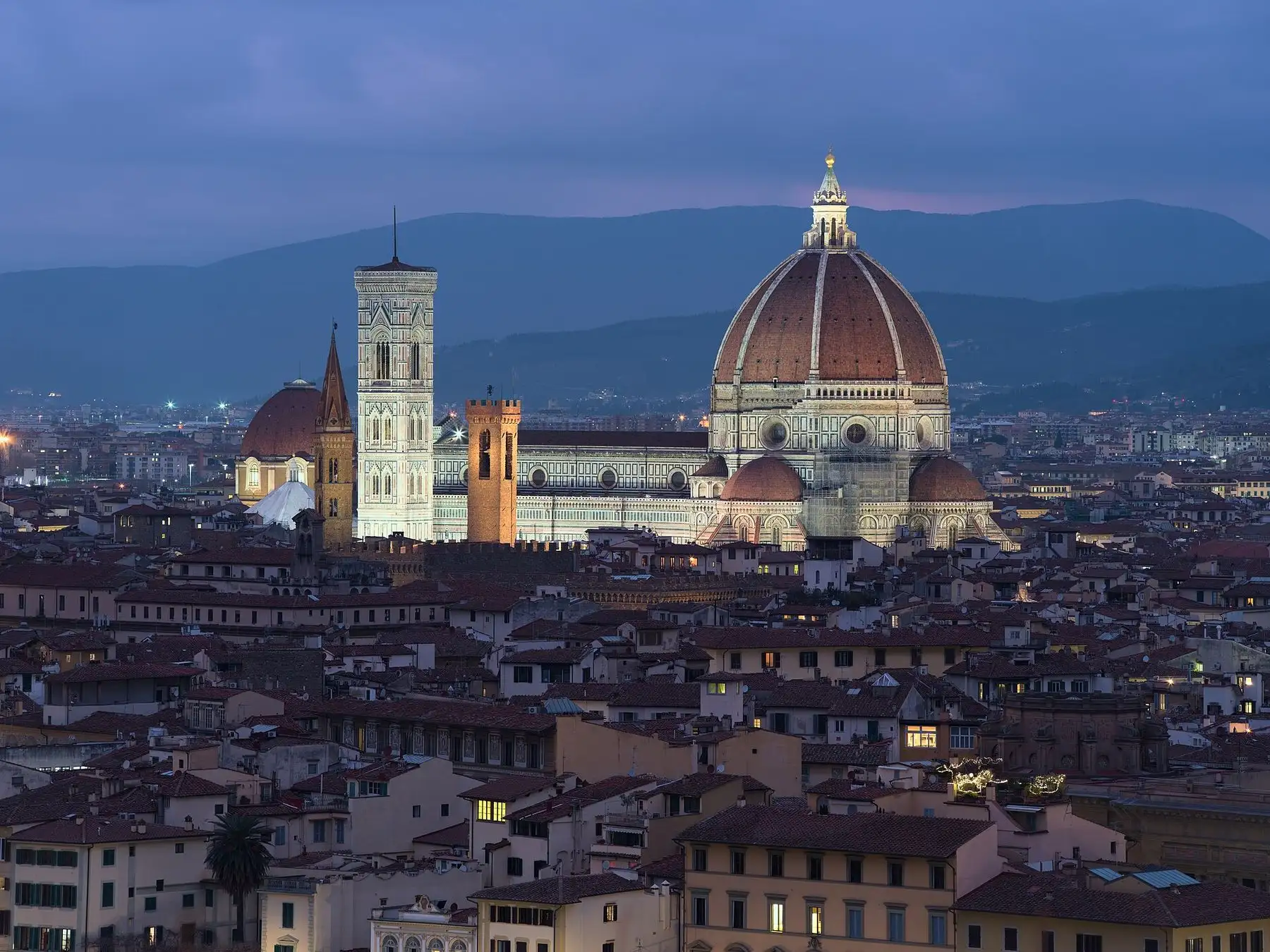

Florence Cathedral and Brunelleschi's dome at dusk from Piazzale Michelangelo, a short walk from the Uffizi and the Accademia.
Milan’s best sights are fewer and farther apart. Leonardo’s Last Supper at Santa Maria delle GrazieMap costs €15 for 15 minutes in the room and sells out weeks ahead. At the DuomoMap you can walk on the roof among the spires (€22 by stairs, €26 by lift), and the Pinacoteca di BreraMap has Mantegna, Raphael and Caravaggio for €20. Milan also has what Florence lacks: contemporary art at Fondazione PradaMap and the free Pirelli HangarBicoccaMap, and La Scala for opera.
Plan around Mondays in both cities. The Last Supper, Brera, the Uffizi and the Accademia are all closed on Monday.
Food: Tuscan classics or Milanese comfort food
Florence is the place for bistecca alla fiorentina, a thick T-bone sold by weight, ribollita bread soup and lampredotto, a tripe sandwich from street stalls. Milan cooks with butter and rice: risotto alla milanese with saffron, ossobuco and the breaded cotoletta. Our guide to what to eat in Milan covers each dish.
Milan’s edge is the evening aperitivo, a drink with snacks for €10 to €20 in the usual areas. In both cities the worst value sits next to the cathedral. I avoid eating around the Duomo in Milan and walk a few streets away first; our list of the best restaurants in Milan has places across the city.
Shopping: Milan, by a distance
Milan is Italy’s fashion capital. The fashion district around Via Montenapoleone has the flagship stores, the Galleria Vittorio Emanuele IIMap is free to walk through at any hour, and the Serravalle Designer OutletMap has more than 230 brands, with a €25 return shuttle from Milano Centrale. Our shopping in Milan guide maps the streets and our outlets near Milan guide compares the villages.
Florence is better for leather goods and handmade pieces from small workshops. If designer clothes are a reason for your trip, choose Milan.
Nightlife: Milan stays out later
Florence has bars and an evening crowd, but it is a small city and nights are quieter. Milan’s night runs in three stages: aperitivo from about 6pm, dinner, then cocktail bars or clubs, which fill up after 11pm. The metro runs until about 12:30am, and night buses follow the metro lines after that. My cocktail pick is LacerbaMap: book, sit at the counter and order the Bloody Mary, the best in Milan and maybe in the world. Our Milan nightlife guide lists the areas and clubs.
Day trips: Lake Como vs Tuscany
This is the closest contest. Florence is the gateway to Tuscany, with direct regional trains to Pisa, Siena and Lucca at fixed fares. Milan is the base for the lakes, the Alps and Switzerland.
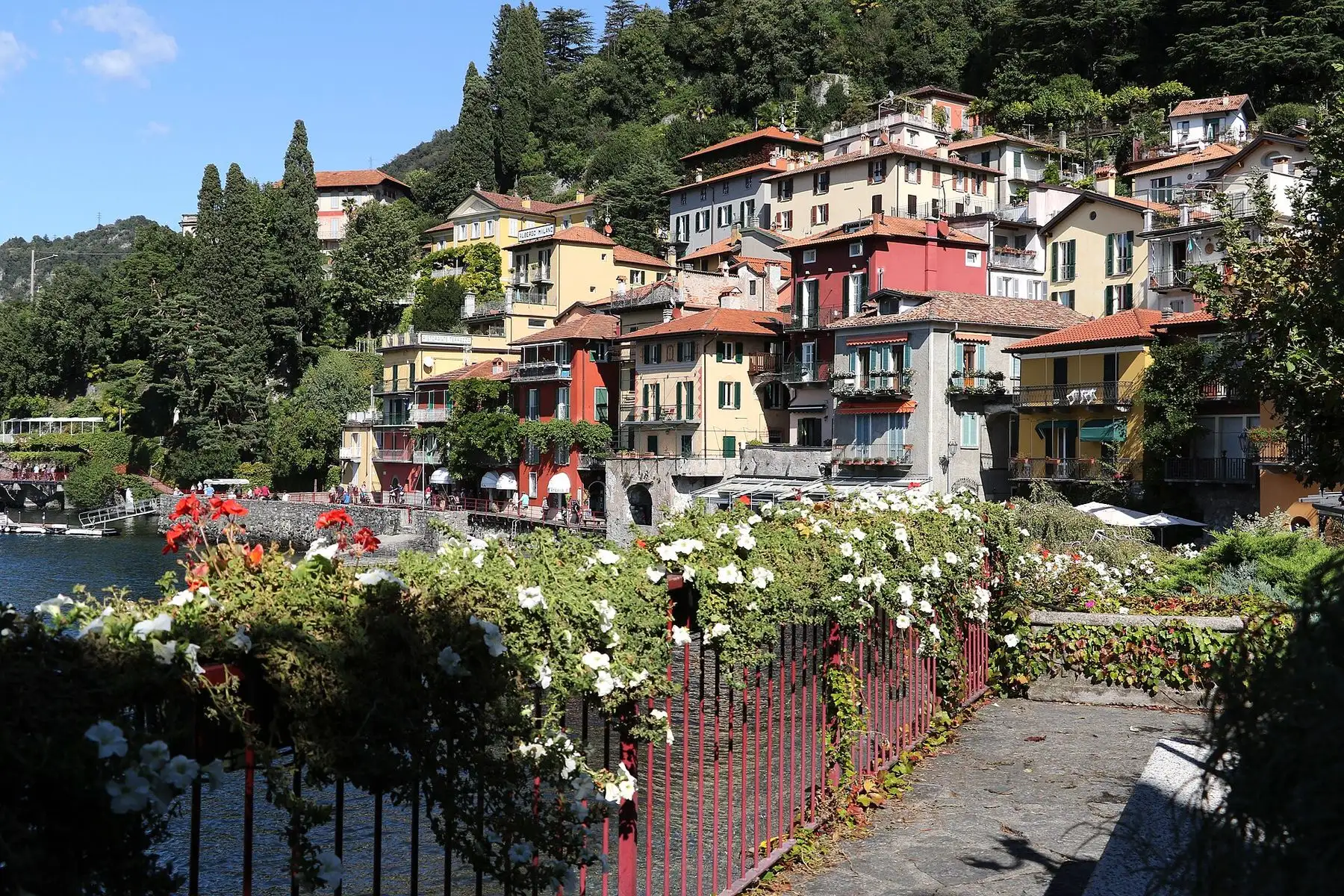

The lakefront houses of Varenna on Lake Como, about 65 minutes from Milano Centrale by direct train.
| From Milan | Fastest direct train | Fare | From Florence | Fastest direct train | Fare |
|---|---|---|---|---|---|
| Lake Como (Varenna) | 65 min | €7.70 | Pisa | 51 min | €9.80 |
| Como | 40 min | €5.40 | Lucca | 1h20 | €8.90 |
| Bergamo | 48 min | €6.30 | Siena | About 1h30 | €10.80 |
| Turin | 44 min | From €13.90 booked ahead | |||
| Lugano, Switzerland | 1h18 | €15 to €16 |
On Lake Como, a €17.50 ferry day pass links Varenna, Bellagio and Menaggio; our Lake Como day trip guide has the timetable. The Chianti wine country and San Gimignano are not on the rail network, so from Florence most people see them on a guided tour or by car. For more from Milan, see our day trips from Milan, or book a guided Lake Como day trip if you would rather not plan the connections.
Crowds: Florence feels fuller
Milan had more tourist nights than Florence in 2024: 14.05 million against 9.19 million. Milan was second in Italy behind Rome, ahead of Venice. But Milan is a city of 1.4 million people, and Florence has about 366,000. That works out to about 10 tourist nights per resident in Milan and about 25 in Florence, two and a half times as many.
You notice it on the street. Florence’s sights sit in a small historic center, so visitors converge on the few streets between the Duomo, the Uffizi and the Ponte Vecchio. In Milan, visitors spread over a large city, and many are there for work or trade fairs. Book the Uffizi, the Accademia and the Last Supper ahead whichever city you pick.
Hotel prices and tourist tax
Hotels in both cities cost far more than the Italian average. Between April and June 2026, the average room cost €238.04 a night in Florence and €228.94 in Milan, against €172.38 nationally.
| City | Average room, Apr to Jun 2026 |
|---|---|
| Venice | €274.08 |
| Florence | €238.04 |
| Milan | €228.94 |
| Rome | €214.37 |
| Como | €197.30 |
On top of the room rate, each city charges a tourist tax per person per night.
| Tourist tax | Milan (2026) | Florence (since February 2025) |
|---|---|---|
| 5-star hotel | €12 | €8 |
| 4-star hotel | €10 | €7 |
| 3-star hotel | €7 | €6 |
| Hostel | €3 | €4 |
| Nights charged | First 14 only in holiday homes and apartments | First 7 |
| Exempt | Under-18s | Under-12s |
The tourist tax is paid at the hotel. For a couple spending three nights in a 4-star hotel, that is €60 in Milan and €42 in Florence. Milan’s current rates apply from 1 April 2026, and the 2027 rates have not been set.
Your dates matter more than the city. Milan’s hotel prices jump during trade fairs and fashion weeks: Women’s Fashion Week runs from 23 February to 1 March 2027, and Design Week with the Salone del Mobile from 13 to 18 April 2027. Compare areas in our where to stay in Milan guide, then check Milan hotel prices for your dates.
Getting there and getting around
If you are flying from the US, Milan is easier. Malpensa has nonstop flights from New York, Atlanta, Boston, Chicago and Miami, among others, and the Malpensa Express reaches Milano Centrale in about 56 minutes for €15. Most Americans reach Florence by connecting in Europe or by train from Milan or Rome.
Once you arrive, Florence’s center is small enough to see on foot. In Milan you will use the metro: a single ride costs €2.20 and a 24-hour ticket €7.60.
You can do both: 1h54 by Frecciarossa
You rarely have to choose. On Tuesday 10 November 2026, 17 direct Frecciarossa trains are scheduled from Milano Centrale to Firenze Santa Maria Novella, the first at 5:10am, mostly once an hour, in 1h54. Italo’s fastest take about 1h43. The last fast train back leaves Florence at 9:55pm and reaches Milan at 11:50pm, so a day trip is possible, although one night in Florence is more relaxed.
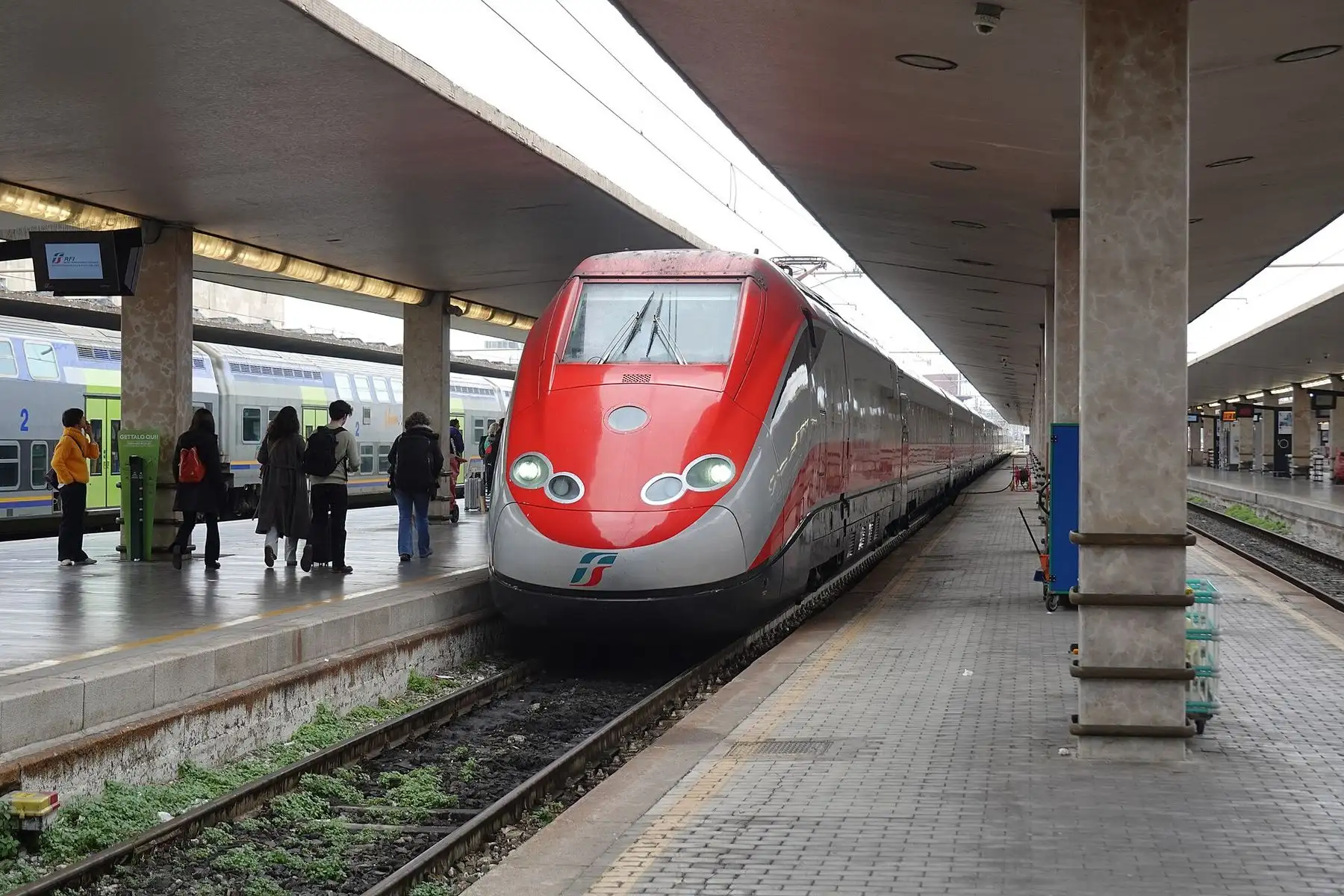

A Frecciarossa at Firenze Santa Maria Novella, the fastest Trenitalia service between Milan and Florence.
Book early. On 6 October 2026, the cheapest Frecciarossa fare was €61 for the next day and €21.90 for a train five weeks later. Our Milan to Florence train guide explains stations and seats, and Trainline compares Frecciarossa and Italo in one search.
Who should pick Milan, and who should pick Florence
Pick Florence if:
- this is your first trip to Italy and you have five days or fewer;
- Renaissance art is the main reason you are going;
- you want to see Tuscan towns such as Siena and Lucca by train.
Pick Milan if:
- you land at Malpensa and want to start where you arrive;
- shopping, design or nightlife matter to you;
- you want Lake Como, Bergamo or Switzerland as day trips;
- you would rather share the streets with fewer tourists per resident.
Do both if you have a week or more. Two or three nights in Milan, then two or three in Florence, is the start of our 10-day Italy itinerary, which continues to Venice and Rome. For a longer look at Milan alone, read is Milan worth visiting, and for visas, money and trains, our first trip to Italy checklist.
Milan or Venice? Milan or Rome?
The same logic applies to the other two big cities.
| Fastest train from Milan | Average hotel room, Apr to Jun 2026 | Choose it over Milan if | |
|---|---|---|---|
| Florence | 1h43 to 1h54 | €238.04 | Art and a walkable old center come first |
| Venice | About 2h15 to 2h27 | €274.08 | You want a city with canals and no cars |
| Rome | 2h50 to 3 hours | €214.37 | You can see only one city in Italy |
Venice had the most expensive hotels in Italy in spring 2026. Rome had 42.7 million tourist nights in 2024, three times Milan’s total. Train details are in our guides to Milan to Venice and Milan to Rome.
Frequently asked questions
Is Milan or Florence better for a first trip to Italy?
Florence, if you have room for only one of the two and you came for Renaissance art and old streets. Milan is the better pick if you fly into Malpensa, want shopping and nightlife, or plan to see Lake Como. With a week or more, do both, since the fastest trains take 1h43 to 1h54.
Can you do Milan and Florence in one trip?
Yes. Frecciarossa trains leave Milano Centrale about once an hour and take 1h54, and Italo's fastest take about 1h43. On a Tuesday in November 2026 the first direct train leaves Milan at 5:10am and the last fast train back from Florence leaves at 9:55pm, so even a day trip works.
Is Florence more expensive than Milan?
For hotels, slightly. The average room cost €238.04 a night in Florence and €228.94 in Milan between April and June 2026, both well above the Italian average of €172.38. Milan's tourist tax is higher (€10 per person per night in a 4-star hotel, against €7 in Florence), and Milan prices jump during trade fairs and fashion weeks.
Which is better to visit, Lake Como or Milan?
You don't have to choose. Direct trains from Milano Centrale reach Varenna on Lake Como in about 65 minutes for €7.70, so most people sleep in Milan and spend a day on the lake. Stay on the lake itself if you want slow days by the water more than museums and restaurants.
What are the big 3 in Italy?
For a first trip, the usual three are Rome, Florence and Venice. By number of tourist nights, Istat counts four big cities: Rome, Milan, Venice and Florence have held the top four places every year from 2015 to 2025.
Is Milan really worth visiting?
Yes, for two or three days. You get the Last Supper, the Duomo rooftop, the Brera gallery and La Scala, plus Lake Como 65 minutes away. Skip it only if this is a short first trip and you haven't seen Rome, Florence or Venice yet.
Milan or Venice?
Venice, if you want to see a city built on canals, with no cars. Milan for evenings out, shopping and day trips. They are about 2h15 to 2h27 apart by high-speed train, and Venice hotels were the most expensive in Italy in spring 2026, at €274.08 a night on average.
Milan or Rome?
Rome, if you can only see one Italian city: the ancient city and the Vatican have no equal in Milan. Milan is the easier start if you land at Malpensa. The fastest trains between them take 2h50 to 3 hours.