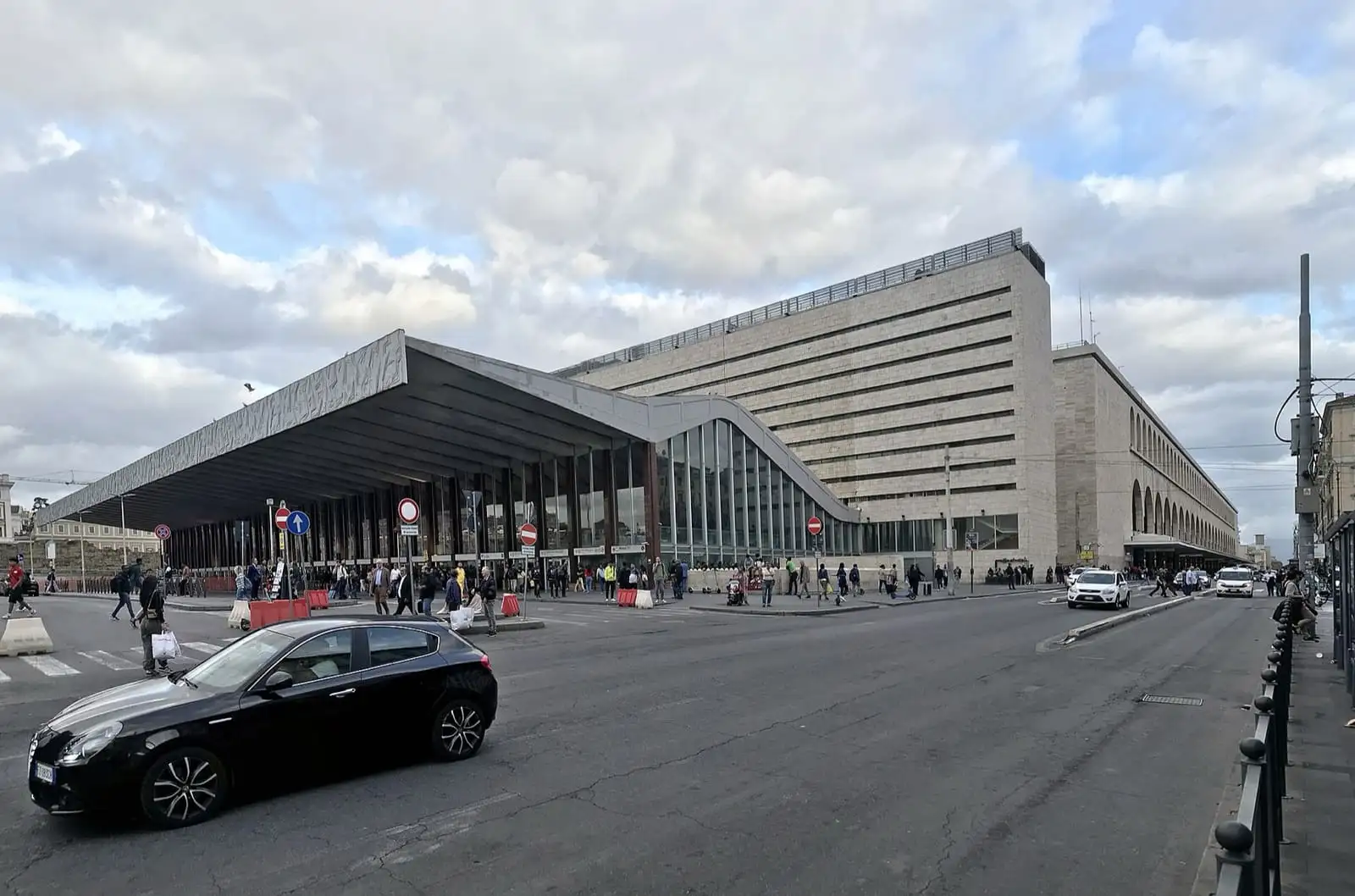
Quick answer
Frecciarossa and Italo high-speed trains run from Milano Centrale to Roma Termini in about 2h50 to 3 hours, with several departures an hour at peak times. Book early: the cheapest Frecciarossa fare was €37.90 five weeks ahead and €95 for the next day. Buy on the Trenitalia or Italo app, or compare both companies in one search on Trainline; a ticket from one company is not valid on the other.
Prices and timetables were checked on 5 October 2026, on the official Trenitalia booking engine and Italo’s route page. On this route booking late costs you the most: see the price table below.
How long the train from Milan to Rome takes
Trains leave from Milano Centrale. Some also stop at Milano Porta Garibaldi or Rogoredo, and some Italo trains at Rho Fiera. Italo gives the rail distance as 567 km.
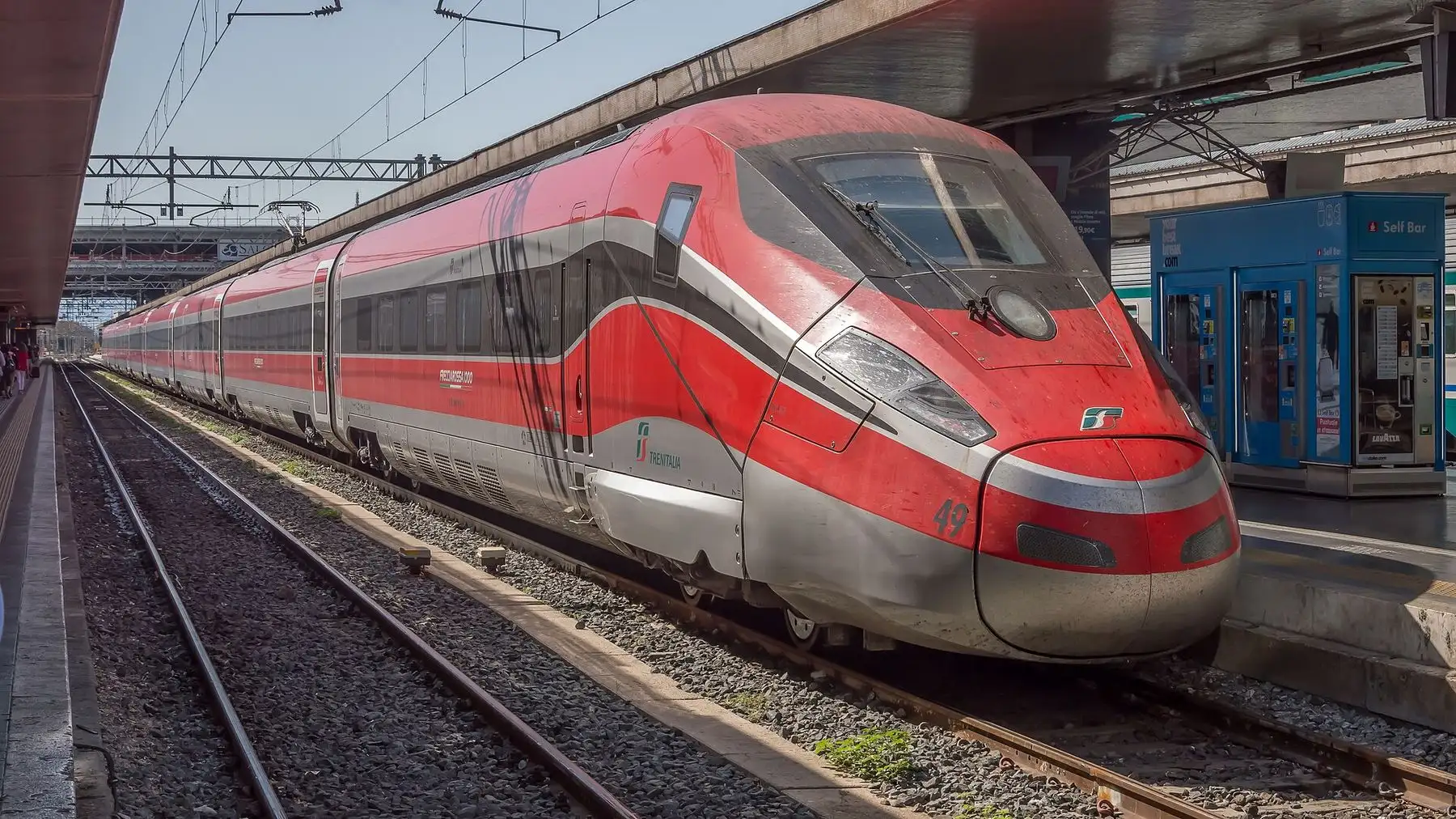

A Trenitalia Frecciarossa 1000 bound for Milano Centrale at Roma Termini station.
| Train | Journey time | Direct trains per day |
|---|---|---|
| Frecciarossa (Trenitalia) | 2h50-2h59 fastest, about 3h10 typical, up to 4h45 | 45 (on a Tuesday) |
| Italo | About 2h52 | 33 |
The slowest Frecciarossa trains take almost two hours longer than the fastest. When the booking screen shows a list of departures, look at the duration as well as the price. On a Tuesday in autumn 2026 the first Frecciarossa left at 5:10am and the last at 8:35pm.
Stops on the way to Rome
Italo’s route page lists Milano Rogoredo, Reggio Emilia AV, Bologna Centrale and Firenze Santa Maria Novella, then Roma Tiburtina and Roma Termini. Frecciarossa trains use the same high-speed line, with stops that change from train to train. If you want to break the trip in Florence, see the Milan to Florence train guide.
Frecciarossa or Italo
Trenitalia is Italy’s state railway, and Frecciarossa is its high-speed service. Italo is a private company that runs only high-speed trains. Their fastest times to Rome are almost the same: 2h50 for Frecciarossa and 2h52 for Italo.
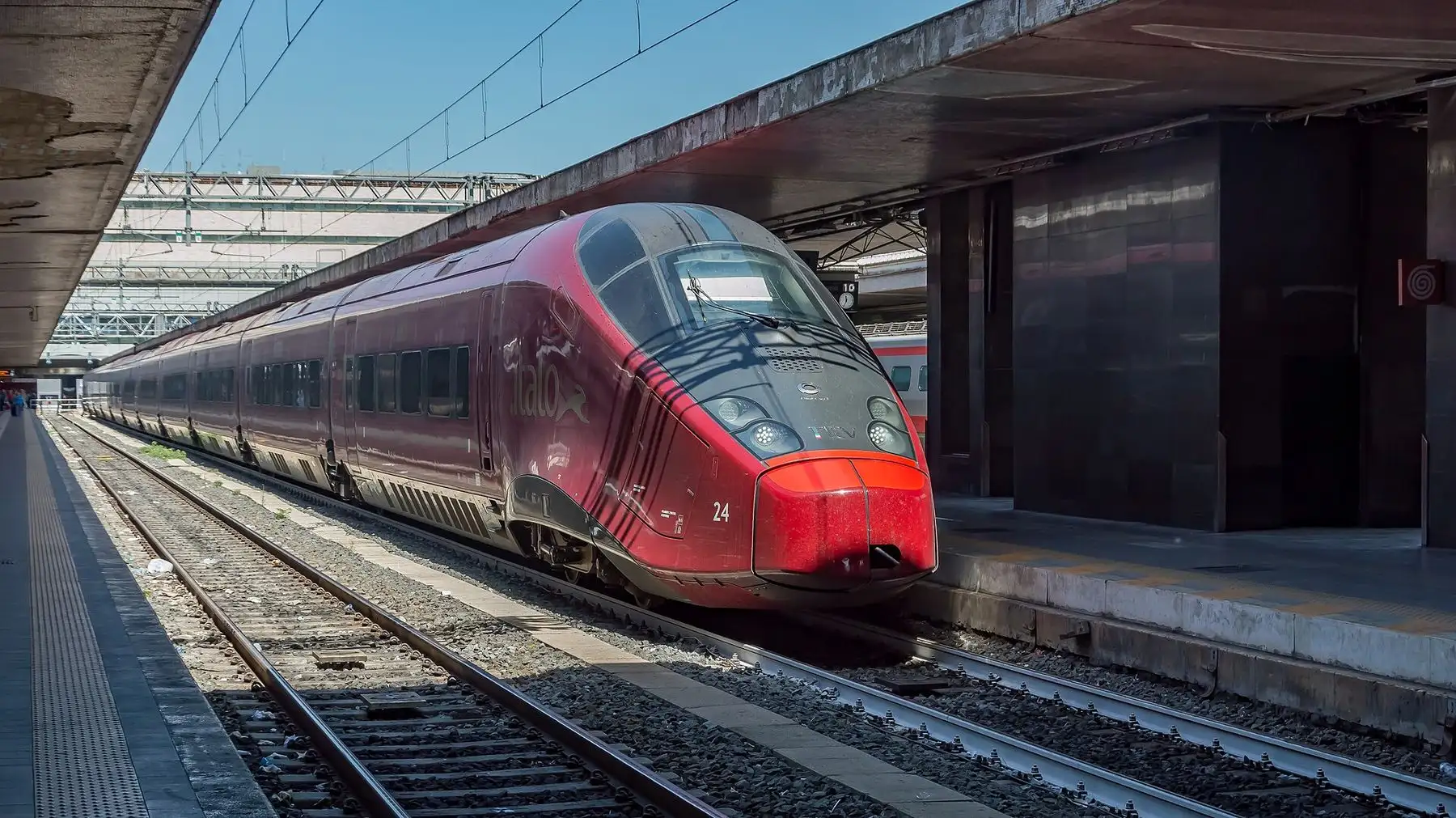

An Italo high-speed train at a platform of Roma Termini.
Between them, Frecciarossa and Italo run about 78 trains a day on this route (45 plus 33), with several departures an hour at peak times. Fares differ from train to train and between the two companies, so compare both for your date before you book.
Each ticket is valid only with the company that sold it. A Frecciarossa ticket will not get you on an Italo train, even if yours is cancelled or you miss it.
How much the Milan to Rome train costs
The table shows fares on the official Trenitalia site on 5 October 2026 for two dates: the next day and a Tuesday about five weeks ahead. Prices are the lowest fare shown per train for one adult, one way, usually Standard class.
| Operator | Next day | 5 weeks ahead |
|---|---|---|
| Frecciarossa | €95-102 | €37.90-69.90 |
Booking five weeks out cut the cheapest Frecciarossa fare from €95 to €37.90, about 60% less. In euros, that is the largest saving of the three main routes from Milan: about €57 per person, one way.
Italo’s “from €29.90” comes from its route page, so treat it as the lowest possible fare, not what you will pay on a given day.
How to buy Milan to Rome train tickets
You can buy tickets here:
- Trenitalia: trenitalia.com or the Trenitalia app.
- Italo: italotreno.com or the Italo app.
- At Milano Centrale: self-service machines and ticket offices.
Trainline puts Frecciarossa and Italo in the same English-language results, so you can spot the cheaper train in one search.
Arriving in Rome: Termini or Tiburtina
On a Tuesday in autumn 2026, the Frecciarossa trains ran from Milano Centrale to Roma Termini, Rome’s main station. Italo’s route page lists two Rome stations, Roma Tiburtina and Roma Termini. When you choose a train, check which station the booking screen shows, and pick the one closer to your hotel.
Which class to book for three hours
Three hours is long enough that you may want to look beyond the cheapest seat. Frecciarossa sells four levels.
| Frecciarossa class | What you get |
|---|---|
| Standard | About 70% of seats face each other in groups |
| Premium | Leather seats that recline to 109° |
| Business | Seats in coaches 2 and 3 |
| Executive | A 10-seat cabin, with access to the FRECCIAClub lounge |
Italo’s classes include Smart, Prima (its business class) and Club Executive, which includes lounge access. Prices for each class change by train and date, so check the difference on your booking screen.
The Frecciarossa 1000 has a power outlet at every seat, free Wi-Fi and a bistro in coach 3. Italo’s Smart class has reclining leather seats with power outlets, free Wi-Fi and a snack area with vending machines for coffee, snacks and cold drinks.
Ticket validation
Frecciarossa and Italo tickets are for a specific train and an assigned seat. You do not stamp them at the station; the conductor checks the PDF or QR code on board.
Stamping applies only to regional trains. A paper regional ticket must be validated in the station machine before you board and used within 4 hours, and digital regional tickets from the Trenitalia app activate on their own. Those rules are explained in the Milan to Venice train guide.
Luggage on the Milan to Rome train
Both operators carry luggage for free. On either train, you have to be able to put your own bags in the racks.
- Trenitalia: no size or number limit is enforced at the moment. Bags go overhead, under seats or in the racks at the end of the car. Size limits announced for 1 March 2024 were suspended hours before they started and could be brought back, so check before you travel.
- Italo: any number of bags. Smart class allows cases up to 75 x 53 x 30 cm, and Prima and Club Executive allow larger ones. Large cases go in the racks at the car ends.
Other trains from Milan
Many Rome trains stop in Florence, and the trip from Milan to Florence alone takes under two hours: see the Milan to Florence train. Many Frecciarossa and Italo trains continue from Rome to Naples, about 4h30 from Milan: see the Milan to Naples train. To link Milan, Venice, Florence and Rome in one trip, see our 10-day Italy itinerary or, with Lake Como too, the 2-week Italy itinerary; with only a week, our 7-day Italy itinerary has a Milan, Florence and Rome route. For Venice, including the cheap regional route, read the Milan to Venice train guide. If you are flying into Milan before heading south, our guide to Milan airports covers how each airport connects to the city.
Frequently asked questions
How long is the train from Milan to Rome?
The fastest trains take 2h50 to 2h59 on Frecciarossa and about 2h52 on Italo. A typical Frecciarossa takes about 3h10 and the slowest about 4h45, so check the duration when you book.
How much is the train from Milan to Rome?
On 5 October 2026, the cheapest Frecciarossa fare was €95 for the next day and €37.90 for a train five weeks later. Italo advertises fares from €29.90.
How many trains a day go from Milan to Rome?
Frecciarossa ran 45 direct trains on a Tuesday in autumn 2026 and Italo lists 33 a day. At peak times there are several high-speed departures every hour.
Which station in Rome does the train arrive at?
On a Tuesday in autumn 2026, the Frecciarossa trains ended at Roma Termini, Rome's main station. Italo's route page also lists Roma Tiburtina, so check the arrival station on your ticket before you pay.
Where does the train stop between Milan and Rome?
Italo's route page lists Milano Rogoredo, Reggio Emilia AV, Bologna Centrale and Firenze Santa Maria Novella before Rome. Frecciarossa stops vary by train.
Can I use a Frecciarossa ticket on Italo?
No. The two companies sell separate tickets, and a ticket is only valid on the operator and train you booked.
Is there a luggage limit on Milan to Rome trains?
Luggage is free on both operators. Trenitalia does not enforce a size limit at the moment, and Italo's Smart class allows cases up to 75 x 53 x 30 cm. You have to lift your own bags into the racks.