Quick answer
The dishes to eat in Milan are risotto alla milanese (saffron risotto), ossobuco (braised veal shank, served with the risotto) and cotoletta alla milanese (a bone-in veal cutlet fried in butter). Try them at trattorie such as Masuelli San Marco, Ratanà or Trattoria Madonnina, have panzerotti at Luini near the Duomo for a cheap lunch, and look for panettone at Christmas.
The dish list below follows the official register of traditional Milanese foods kept by the Comune di Milano. Venues, prices and opening hours were checked on 5 October 2026.
Milanese food at a glance
Many Milanese classics are built on rice, butter and veal. Since 2007 the city has recognized its signature dishes with a municipal designation called De.Co. (denominazione comunale), and the register now holds 11 foods.
| Dish | What it is | Where to try it |
|---|---|---|
| Risotto alla milanese | Saffron risotto with beef marrow and butter | Ratanà, Trippa |
| Ossobuco | Braised veal shank with its marrow bone | Masuelli San Marco, Osteria dell’Acquabella, Al Matarel |
| Cotoletta alla milanese | Bone-in veal cutlet fried in butter | Trattoria Madonnina, Il Liberty |
| Mondeghili | Meatballs made from leftover meat | Ratanà |
| Panzerotti | Fried turnovers with mozzarella and tomato | Luini |
| Panini | Sandwiches from a kiosk | Chiosco Al Politico |
| Panettone | Sourdough Christmas bread with raisins and candied peel | Cova, Marchesi 1824, Pavé |
Risotto alla milanese and ossobuco
Risotto alla milanese is the city’s best-known dish. Saffron gives it the golden color, and the rice is toasted and then cooked slowly in meat broth with beef marrow, butter and white wine. The Comune dates the recipe back to the 16th century, and a “risotto giallo” (yellow risotto) appears in a cookbook from 1829.
Ossobuco is a cross-cut veal shank braised slowly, with the marrow still inside the bone. It is finished with gremolada, a mix of garlic, parsley and lemon zest, and the classic way to eat it is next to a plate of saffron risotto. Both dishes entered the De.Co. register in 2007.
Where to try them:
- Trattoria Masuelli San MarcoMap, Viale Umbria 80. A family trattoria since 1921, now in its third generation, with ossobuco and saffron risotto on the menu. Book online or at 02 5518 4138.
- Osteria dell'AcquabellaMap, Via San Rocco 11 in Porta Romana. An osteria since 1950 for risotto with ossobuco, cotoletta and mondeghili, open Tuesday to Saturday. It’s my pick for Milanese food.
- RatanàMap, Via Gaetano de Castillia 28 in Isola. In the Michelin Guide at €€ for its old Milan-style risotto with gremolata and roast jus. Michelin flags it “Worth Queueing For”.
- TrippaMapBook on TheFork, Via Giorgio Vasari 1. A Michelin Bib Gourmand where the risotto comes with grilled marrow. It opens for dinner Monday to Friday and books up weeks ahead, through its website only.
- Al MatarelMap, Via Laura Solera Mantegazza 5 in Brera. Ossobuco and risotto, with a little spoon to scoop the marrow out of the bone.
Cotoletta alla milanese
The cotoletta is a bone-in veal cutlet dipped in egg and breadcrumbs and fried in butter. The traditional cut is thick, at least 3 cm, while the version beaten thin and wide is nicknamed orecchia d’elefante, elephant ear. The Comune says the dish goes back at least to the Middle Ages and gave it De.Co. status in 2008.
Trattoria MadonninaMap, Via Gentilino 6 near the Darsena, serves the elephant-ear version, plus ossobuco with risotto and gremolata. It is one of the oldest trattorie in the city and has been under new management since 2023.
Il LibertyMapBook on TheFork, Viale Monte Grappa 6 near Porta Nuova, is a more creative kitchen in the Michelin Guide at €€€ that makes a premium veal cutlet with fresh-cut chips. It is closed on Sunday.
Other traditional Milanese dishes
These are harder to find on menus in the center, and several are seasonal. All of them except busecca and nervetti are on the De.Co. register.
- Minestrone alla milanese: a vegetable soup made with rice in place of pasta. The vegetables change with the season.
- Cassoeula: a winter stew of pork cuts and Savoy cabbage, cooked for hours. It started as a way to use the cheaper cuts after the pig was butchered.
- Mondeghili: meatballs made from leftover meat, bread, egg and herbs, fried in butter. Ratanà serves them wrapped in paper.
- Rostin negaa: a veal roast cooked slowly until dark, which is where the name comes from.
- Busecca: tripe soup with beans. The restaurant Trippa takes its name from tripe and is known for it.
- Nervetti: boiled veal cartilage cut into strips and served cold with pickled onions and peppers.
- Michetta: the star-shaped, hollow bread roll of Milan, introduced under Austrian rule.
If you want several of these in one dinner, the trattorie in the first section are your best bet. Our guide to the best restaurants in Milan covers more places, from pizza to Michelin stars.
Milan street food and quick lunches
Milan’s cheap eats are fried, baked or pressed. Many are a few minutes from the Duomo, but my advice is to avoid sitting down to eat right around the cathedral square, where most places cook for tourists: grab something to go, or walk ten minutes.
Chiosco Al PoliticoMap, Piazza Castello 5, by the entrance to Sforza Castle. A sandwich kiosk run by the same owner since 1991, with dozens of panini named after Italian politicians. It’s my alternative to eating near the Duomo. It is open every day from 10:30am to midnight.
LuiniMap, Via Santa Radegonda 16, a minute from the cathedral. Panzerotti, small fried turnovers, made by the same family since 1949. Order the classic mozzarella and tomato. There are no reservations and lines are normal, so eat it on the street.
SpontiniMap has been making pizza al trancio, a tall slice with a crisp base, since 1953. A normal slice weighs just over 300 g.
De SantisMap, Corso Magenta 9, has pressed panini for over 60 years, a short walk from the Last Supper.
La Ravioleria SarpiMap, Via Paolo Sarpi 27, makes dumplings in Milan’s Chinatown and takes walk-ins.
At the main station, Mercato Centrale MilanoMap is a food hall with many small counters, open from 6:30am to 11pm. It is useful while you wait for a train; our Milano Centrale guide shows where it is.
Breakfast: cappuccino and brioche
The Milanese breakfast is a cappuccino and a brioche, the Italian breakfast pastry, often taken standing at the bar counter.
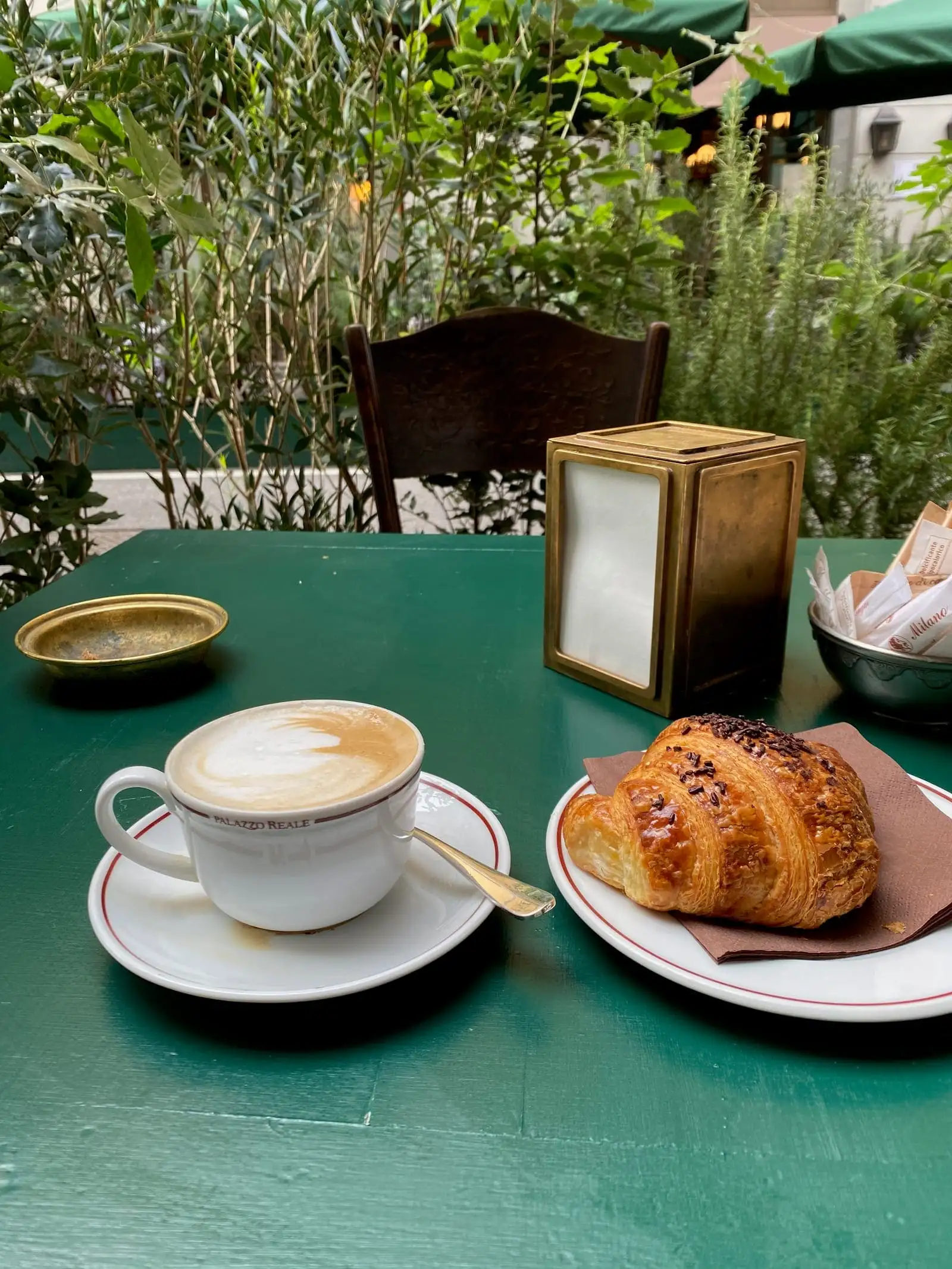
Cappuccino and brioche, the standard Milanese breakfast.
Pasticceria CucchiMap, Corso Genova 1, opened in 1936 and serves breakfast every day from 7:30am. It stays open until 9:30pm, so you can come back for aperitivo. It is a short walk from the Navigli.
The places I recommend for breakfast are PavéMap (Via Felice Casati 27, Porta Venezia), PanMap, a Japanese-style bakery on Via Leopoldo Cicognara 19, OnestMap (Via Turroni 2) for specialty coffee, Olga DéliceMap in Città Studi for cinnamon rolls, Pasticceria SissiMap in Piazza Risorgimento for custard-filled brioches, and the historic Cova and Marchesi 1824 (more on both below). Addresses and hours are in our best restaurants in Milan guide.
Panettone and seasonal sweets
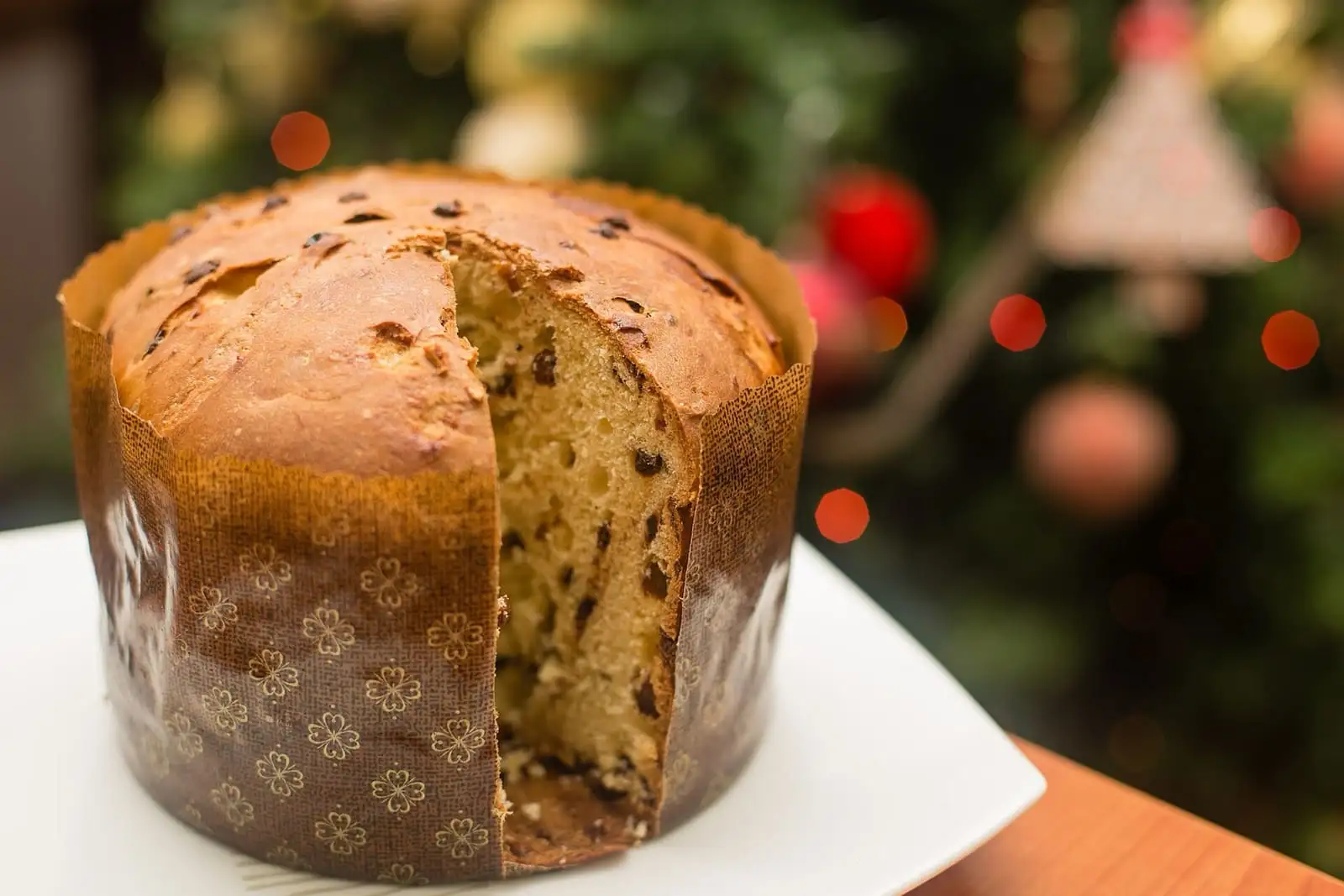
Panettone is the Christmas bread of Milan, and the Comune traces it in written sources back to the 17th and 18th centuries. Italian law sets the recipe: a product sold as panettone must rise with natural sourdough and contain at least 16% butterfat, 4% egg yolk and 20% raisins and candied citrus peel.
.jpg)
A panettone cut open to show the raisins and candied peel.
What you find depends on when you visit:
| When | What to eat | Notes |
|---|---|---|
| Christmas | Panettone | Oh Bej Oh Bej fair around Sforza Castle (5 to 8 December in 2025, 2026 dates announced closer to the time), with roasted and smoked chestnuts |
| Carnival | Chiacchiere | Fried pastry strips with powdered sugar; Milan’s carnival ends on 13 February 2027 |
| Easter | Colomba | Dove-shaped sweet bread with a sugar and almond glaze |
| 23 April | Pan de mej | Corn-flour sweet for San Giorgio, added to the De.Co. register in 2026 |
| Winter | Cassoeula | Pork and cabbage stew, a cold-weather dish |
Milan’s carnival follows the Ambrosian rite, so it ends four days later than in the rest of Italy, on the Saturday after Ash Wednesday. Our guide to the best time to visit Milan shows what else happens in each season, and the Sforza Castle guide covers the area where the Christmas fair sets up.
Where to buy panettone:
- Pasticceria CovaMap, Via Montenapoleone 8. Founded in 1817 next to La Scala, with panettone as a house classic.
- Marchesi 1824Map sells panettone all year.
- PavéMap, Via Felice Casati 27, makes a traditional panettone and has four shops in Milan.
- Iginio MassariMap has a Milan shop and sells panettone online from €29.
Cheese and food shops
Gorgonzola, the blue cheese, has EU protected status (DOP) and is made only in parts of Lombardy and Piedmont, the region around Milan and its western neighbor.
For a food shop that sells everything at once, PeckMap, Via Spadari 9 near the Duomo, calls itself Milan’s first food hall, open since 1883. It is open Tuesday to Saturday 9am to 7:30pm, Monday from 3pm, and closed on Sunday. Its traditional 1 kg panettone costs €45 in the online shop.
Drinks: Campari, Negroni Sbagliato and aperitivo
Campari was born in Milan, and Camparino in GalleriaMap, Piazza Duomo 21, has served it since Davide Campari opened the bar in 1915. The Negroni Sbagliato (Negroni with sparkling wine in place of gin) was created in 1972 at Bar BassoMap, Via Plinio 39.
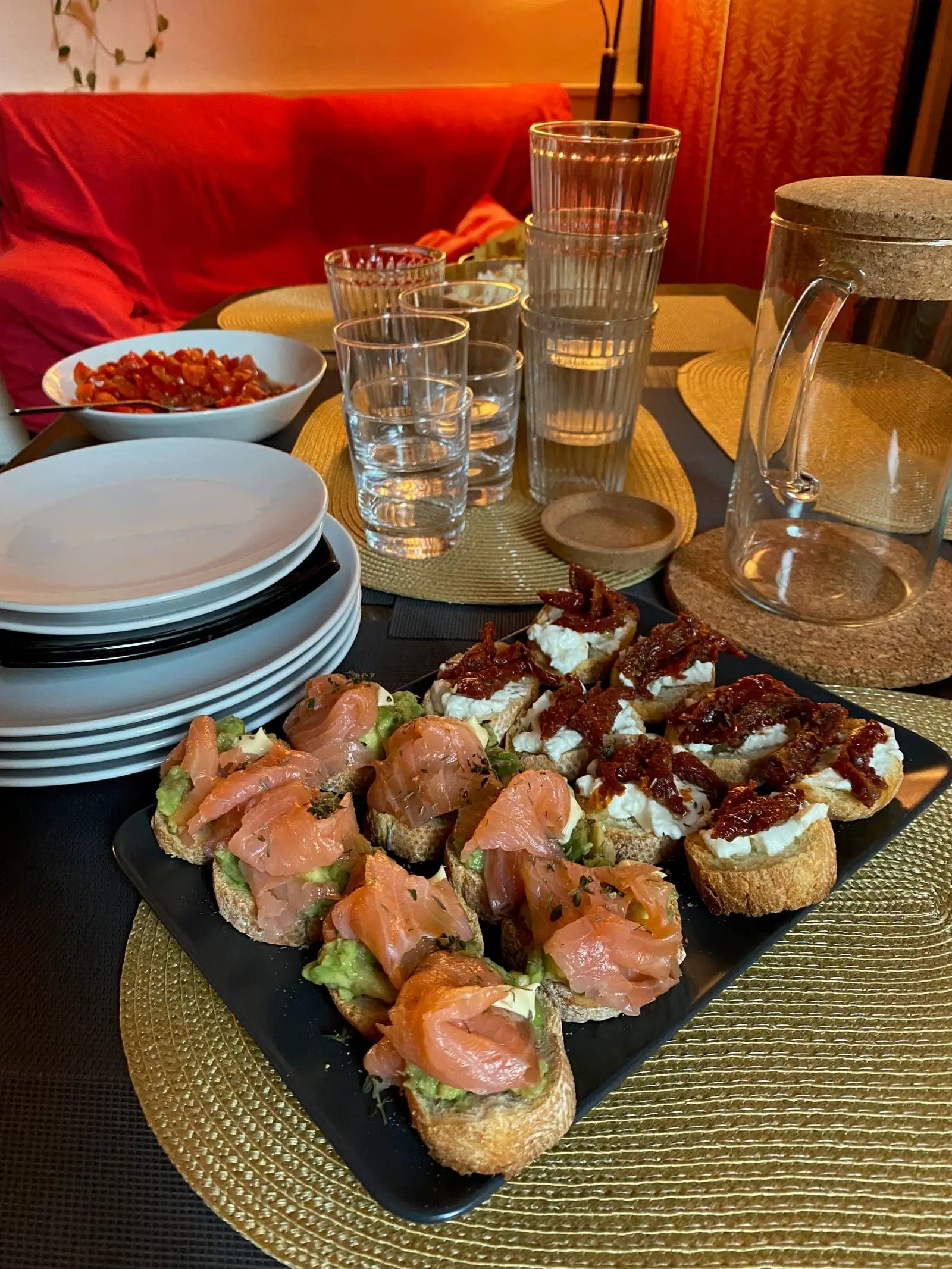
Small plates of snacks served with drinks at aperitivo.
Barbajada, a mix of milk, coffee and chocolate named after the 19th-century impresario Domenico Barbaja, is also on the De.Co. register, but few bars still make it.
Early evening is aperitivo time, when a drink comes with snacks. Our aperitivo in Milan guide explains how it works and where to go, and the Milan nightlife guide picks up from there.
Food tours in Milan
If you only have a day, a guided tasting walk covers several of these dishes in a few hours. Food tours in Milan usually stop at a few shops and trattorie with a local guide. Check what the listing includes (full meal or tastings) and the cancellation terms before you book.
Tips for eating in Milan
- Meal times. Restaurants usually serve lunch from about 12:30 to 2:30pm and dinner from about 7:30pm.
- Book dinner. Popular trattorie such as Trippa fill up weeks ahead. Luini and La Ravioleria Sarpi take walk-ins.
- Coperto. Most bills add a cover charge of €1 to €5 per person for bread and table setting. It is legal only if the menu shows it.
- Gelato. Skip the shops with tall, bright mounds of gelato in the window: it looks too pretty for a reason. Good gelato is usually kept flat or in covered metal tubs called pozzetti.
- August. Many restaurants close for a few days to a month around 15 August, so check before you go.
For more on tipping and booking, see the best restaurants in Milan. To fit meals around the sights, the 2 days in Milan itinerary suggests where to eat along the way, and our Milan metro guide explains how to get between neighborhoods.
Frequently asked questions
What food is Milan famous for?
Risotto alla milanese (saffron risotto), ossobuco (braised veal shank) and cotoletta alla milanese (a bone-in veal cutlet fried in butter). Panettone, the Christmas sweet bread, also comes from Milan. All four are on the city's official De.Co. register of traditional foods.
Where can I eat ossobuco and risotto alla milanese in Milan?
Trattoria Masuelli San Marco, Osteria dell'Acquabella in Porta Romana, Al Matarel in Brera and Trattoria Madonnina near the Darsena all serve ossobuco with saffron risotto. Ratanà in Isola is known for its old Milan-style risotto. Book ahead for dinner.
What is the street food of Milan?
Panzerotti, small fried turnovers filled with mozzarella and tomato, from Luini near the Duomo, which has been frying them since 1949. Thick slices of pizza al trancio from Spontini, pressed panini from De Santis and the panini of the Chiosco Al Politico kiosk by Sforza Castle are the other classics.
What is cotoletta alla milanese?
A bone-in veal cutlet dipped in egg and breadcrumbs and fried in butter. The thin, beaten-out version is called orecchia d'elefante, elephant ear. The city added it to its De.Co. register in 2008.
Can you buy panettone in Milan outside Christmas?
Yes. Marchesi 1824 sells panettone all year, and Iginio Massari sells it online from €29. At Christmas you also find it at the Oh Bej Oh Bej fair around Sforza Castle, which ran from 5 to 8 December in 2025; the 2026 dates are announced closer to the time.
What sweets do they eat in Milan at Carnival and Easter?
Chiacchiere, fried strips of pastry covered in powdered sugar, at Carnival, which in Milan ends four days later than in the rest of Italy (on 13 February in 2027). At Easter it is the colomba, a dove-shaped sweet bread with a sugar and almond glaze.
What is a typical Milanese breakfast?
A cappuccino and a brioche at the bar, often taken standing at the counter. Pavé, Pan, Onest, Olga Délice and Pasticceria Sissi are good places for it, and Pasticceria Cucchi on Corso Genova, open since 1936, opens at 7:30am every day.