Quick answer
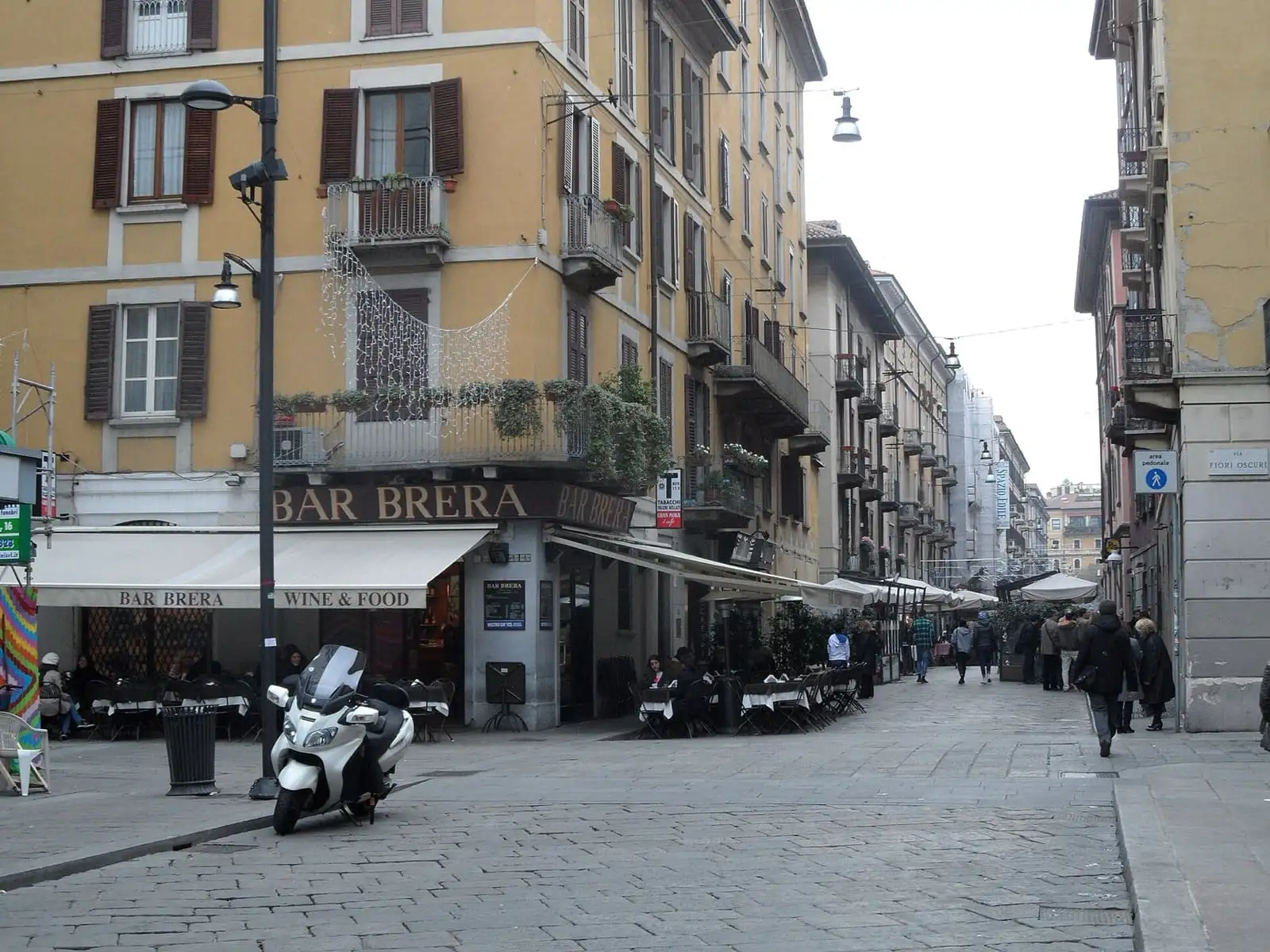
Brera is the old art district just north of La Scala, about 15 minutes on foot from the Duomo. Come for the Pinacoteca di Brera (€20, book a time, closed Mondays), the free botanical garden behind it, and the pedestrian streets around Via Fiori Chiari for shopping and dinner. The nearest metro stops are Lanza (M2) and Montenapoleone (M3).
Opening hours and prices below were checked on 5 October 2026 on the official sites of the Pinacoteca, Palazzo Citterio, the botanical garden and the astronomical museum.
What Brera is known for
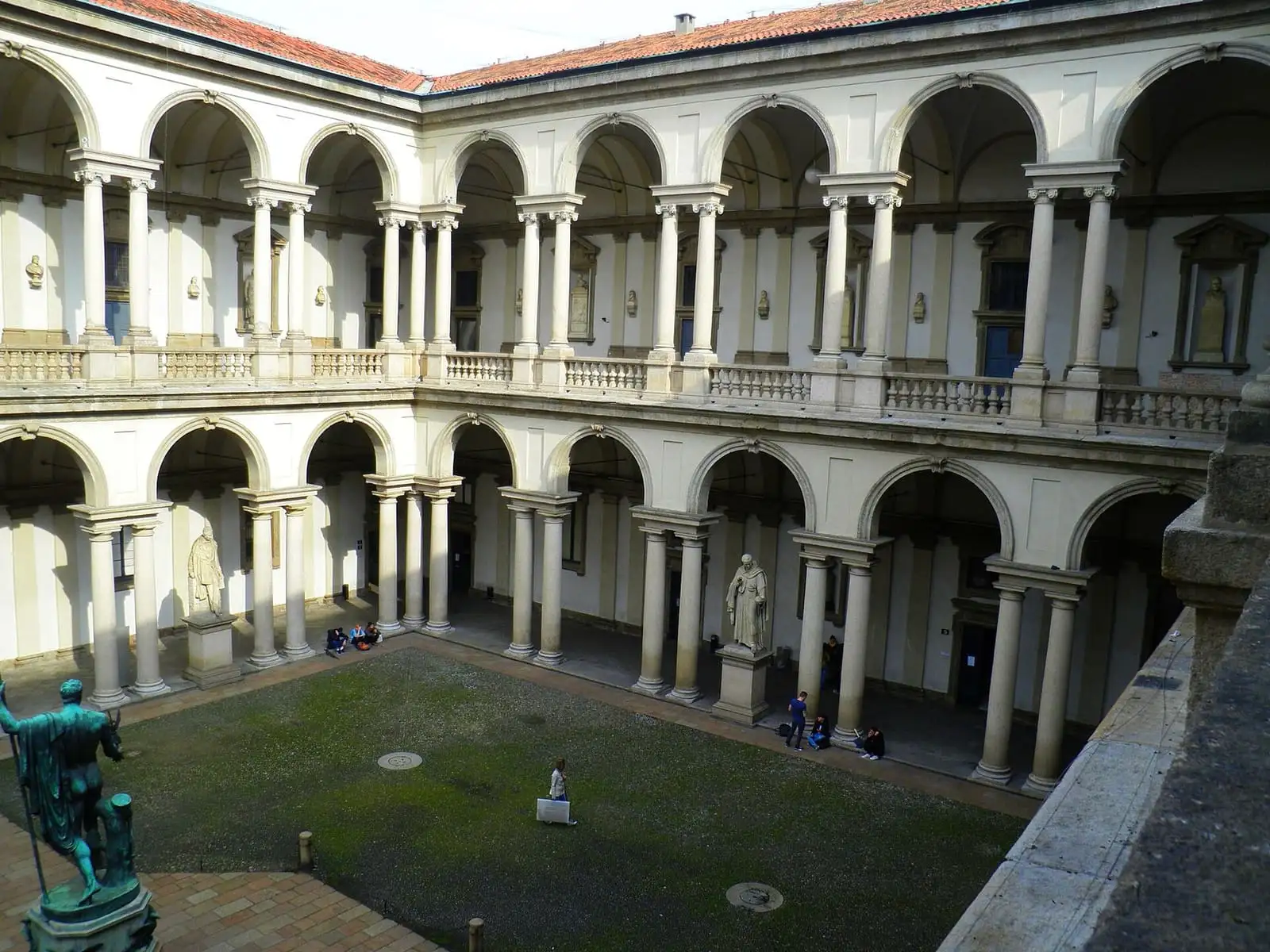
Brera grew around one building, the Palazzo di BreraMap at Via Brera 28. It started as a monastery and became a Jesuit college. When the Jesuits were disbanded in 1773, Empress Maria Theresa of Austria gave it to the city’s cultural institutions. It still holds the Pinacoteca (the picture gallery), the Academy of Fine Arts, the national library, the astronomical observatory and the botanical garden.
The art school brought artists to the surrounding streets, and the galleries, antique dealers, bars and restaurants followed. Today it is one of the pricier parts of central Milan, and many of its lanes are closed to cars.
How to get to Brera
You can walk from the main sights:
- From the Duomo: about 15 minutes. Walk through the Galleria Vittorio Emanuele II to Piazza della Scala, then head north to Via Brera. From La Scala to the Pinacoteca is 0.6 km, about 9 minutes.
- From Sforza Castle: Lanza station sits between the two, so the castle and Brera fit in one afternoon. Our Sforza Castle guide has the museum hours.
By metro, the museum lists Lanza (green M2), Montenapoleone (yellow M3) and Cairoli (red M1). Moscova (M2) also works for the northern end of the district. From Milano Centrale, the green M2 runs direct to Lanza in four stops. If you fly into Malpensa, take the Malpensa Express to Cadorna and change to the M2 for one stop to Lanza; our Malpensa to Milan guide covers the train.
Pinacoteca di Brera and Palazzo Citterio
The Pinacoteca di BreraMap is the main sight. Its own list of masterpieces includes Mantegna’s Lamentation over the Dead Christ, Raphael’s Marriage of the Virgin (1504), Piero della Francesca’s altarpiece with Federico da Montefeltro, Caravaggio’s Supper at Emmaus (1606) and Francesco Hayez’s The Kiss (1859).

The same ticket covers Palazzo CitterioMap, an 18th-century palace a few doors down at Via Brera 14 that opened as a museum on 8 December 2024. It shows 20th-century art from the Jesi and Vitali collections, with works by Boccioni, Morandi, Modigliani and Picasso.
| Pinacoteca di Brera | Palazzo Citterio | |
|---|---|---|
| Address | Via Brera 28 | Via Brera 14 |
| Open | Tuesday to Sunday, 8:30am to 7:15pm | Tuesday to Sunday, 8:30am to 7:15pm |
| Last entry | 6pm | 6pm |
| Closed | Mondays, 1 January, 1 May, 25 December | Mondays, 1 January, 1 May, 25 December |
| Ticket | €20 Grande Brera, covers both | Included, valid that day and the next 6 days |
| Free | Under 18, visitors with disabilities and a companion, first Sunday of the month (booking required) | Same |
A few things to know before you book:
- Booking is required. You pick a date and time on brerabooking.org, at the ticket office or through the call center on +39 02 72105141 (9am to 6pm).
- The €4 reduced ticket for ages 18 to 25 applies to EU citizens and a few other European countries, so most Americans pay €20.
- Audio guides in English cost €5.
- The next free Sundays are 1 November and 6 December 2026. They still need a reservation.
The Pinacoteca stays open later than most Milan museums, which makes it a good last stop of the day. It has also run the Last Supper museum since December 2024. For more galleries in the city, see our guide to Milan’s museums.
If you want a guide, GetYourGuide lists Pinacoteca tickets and guided tours. The official ticket is cheaper if all you need is entry.
Orto Botanico di Brera, the free garden
Behind the palace is the Orto Botanico di BreraMap, a botanical garden founded in 1774-1775 for Maria Theresa and now run by the University of Milan. It is small and quiet, with flower beds, two old oval ponds and a few monumental trees.
- Entry: free.
- Hours: Monday to Saturday, 10am to 6pm from 1 April to 31 October, and 9:30am to 4:30pm from 1 November to 31 March. Closed on Sundays and public holidays.
- Entrances: Via Brera 28 (through the palace) and Via Fratelli Gabba 10, which has a ramp for wheelchairs.
- Rules: no picnics, no dogs and no bikes or scooters, even pushed by hand.
The garden closes for a week or so in mid-August and on some days with weather alerts. The closures are posted on its visit page.
The astronomical museum
On the upper floors of the same building, the Museo Astronomico di BreraMap shows the old observatory’s instruments. The gallery opens only on Tuesday and Thursday, 1:30pm to 5:30pm, and costs €6, or nothing if you show a Grande Brera ticket. The visit takes about 45 minutes, and there is no elevator to the second floor.
On some Sundays, small groups of seven climb to Schiaparelli’s dome on the fifth floor (€12, about 75 minutes, no elevator). The next listed date is Sunday 11 October 2026.
Brera’s prettiest streets
The pedestrian streets west of Via Brera are where most people end up. Start on Via Madonnina, walking down Via Fiori Chiari and continuing to Via Solferino, past the small contemporary art galleries. Piazza del Carmine, a small square nearby, is a good stop for a coffee.
Those small galleries are the best free thing to do here in the evening. When one opens a new show it holds a vernissage, and anyone can walk in: search Google for “vernissage Milano” or check the Artribune openings calendar. Entry is free, and they often pour you a glass of wine.
In the courtyard of the Palazzo di Brera, look for the bronze statue of Napoleon as Mars the Peacemaker, cast after a design by Antonio Canova and placed there in 1859.
The Brera antiques market
The antiques market, the Mercatino di Brera, fills Via Fiori Chiari and the nearby streets once a month. It is held on the third Sunday of the month, from morning to early evening, with no market in August. Expect porcelain, glass, costume jewelry and vintage watches from around sixty stalls.
The next third Sundays are 18 October, 15 November and 20 December 2026. Dates can shift, so if you plan a Sunday around it, ask your hotel to confirm. On the last Sunday of the month there is a bigger antiques market on the Naviglio Grande.
Shopping in Brera
Brera is the place for small boutiques by emerging designers, vintage, art and design bookshops, jewelers and perfume shops. Start on Via Madonnina and Via Fiori Chiari, then go on to Via Montebello and Via Mirabello. The big fashion flagships are a short walk east, in the Quadrilatero della Moda around Via Montenapoleone; our Milan shopping guide covers both.
Brera Design District and Design Week
Brera Design District is a network of permanent design showrooms in the neighborhood, open all year. It becomes one of the main hubs of Milan Design Week in April: Brera Design Week 2027 runs from 12 to 18 April 2027, alongside the Salone del Mobile at the Rho fairground from 13 to 18 April.
Design Week is the busiest week of the year for Milan hotels, so book early if your dates overlap. In 2026 the botanical garden stayed open until 10pm during the event.
Where to eat and drink in Brera
Brera’s streets are lined with restaurants and bars. Here are six to start with, from trattorias open for decades to a pizza and cocktail bar.
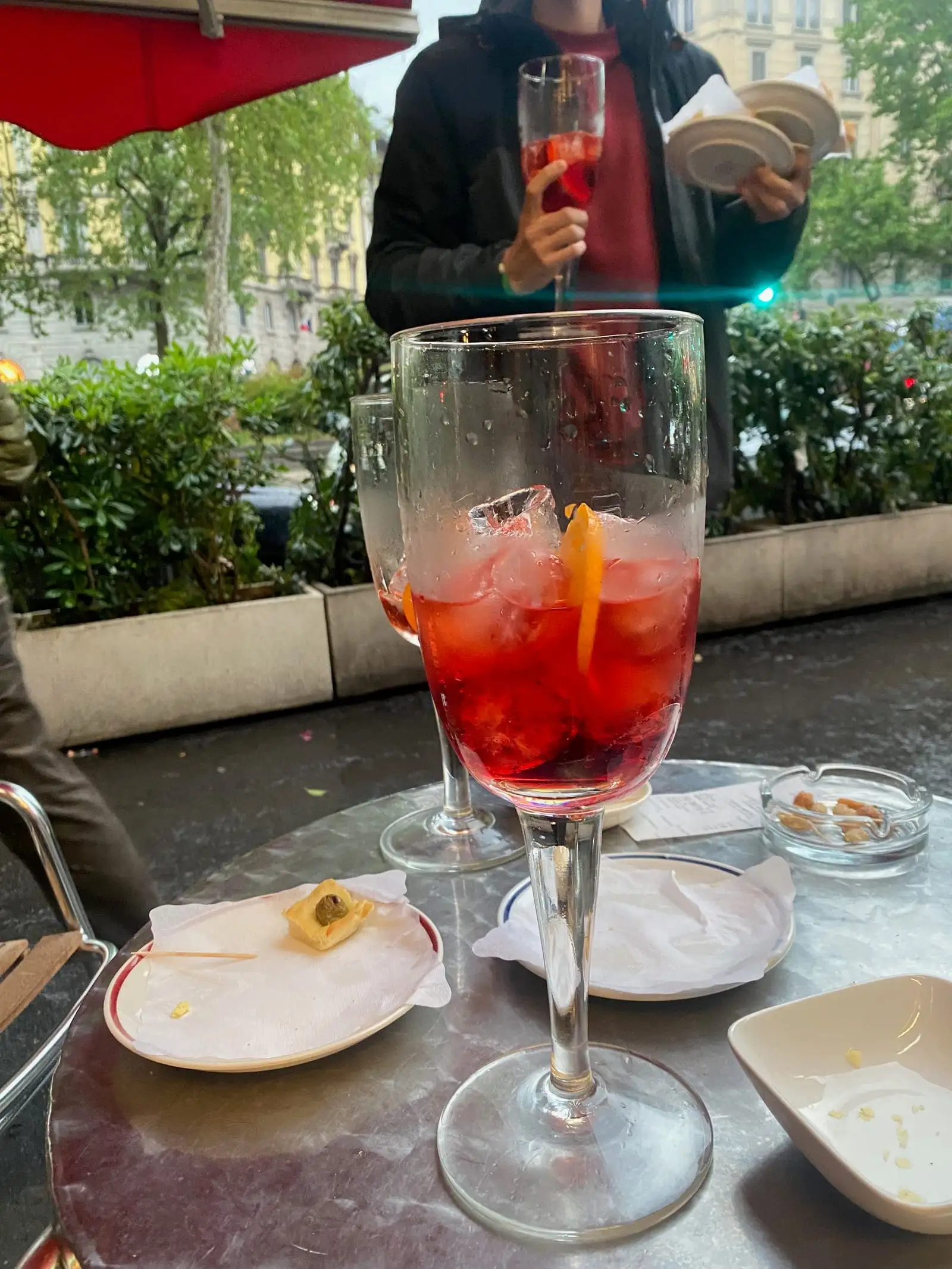
A spritz at aperitivo time, the early-evening drink served with snacks across Milan.
- Trattoria Torre di PisaMap, Via Fiori Chiari 21. A trattoria open since 1951, cooking Tuscan and Milanese dishes, and serving all day from noon to midnight.
- La LiberaMap, Via Palermo 21. Open since 1979, every day for lunch and dinner. Risotto al salto (crisp fried saffron risotto) is about €17 and the cotoletta about €31.
- Al MatarelMap, Via Laura Solera Mantegazza 5, at the northern edge of Brera. An old-style trattoria known for ossobuco and saffron risotto.
- Dry MilanoMap, Via Solferino 33. Pizza paired with cocktails, Tuesday to Sunday from 6pm to 2am.
For a drink:
- JamaicaMap, Via Brera 32, a bar open since 1911, a few doors from the Pinacoteca. It is open every day from 10am to 2am.
- N'Ombra de VinMap, Via San Marco 2, a wine bar in the former refectory of an Augustinian convent, with cheese and cured meats at aperitivo time.
My rule for gelato: skip the shops with tall, bright mounds piled high in the window. Gelato that looks too pretty usually looks fake for a reason. Good gelato is often kept flat, or in covered metal tubs called pozzetti, where you can’t see it until they open the lid.
Aperitivo starts around 6pm. Our aperitivo guide explains how it works, and our list of the best restaurants in Milan covers more of the city. Brera is one of the areas under Milan’s nightlife ordinance until 2 November 2026: shops stop selling alcohol at 10pm and takeaway drinks stop at midnight, so it is quieter late at night than the Navigli. Our Milan nightlife guide has the details.
Hotels in Brera
Brera is one of the two best bases for a first visit, with the Duomo area. You can walk to the cathedral, La Scala and Sforza Castle, but prices are similar to the Duomo area and there are very few budget rooms. A recent opening is Casa Brera, a Luxury Collection HotelMap, opened in autumn 2024 on Piazzetta Bossi with interiors by Patricia Urquiola.
Our guide to where to stay in Milan compares Brera with the other areas, and the best hotels in Milan lists the top picks in and around it. To check prices on your dates, search hotels in Brera on Booking.com.
How to fit Brera into your trip
Brera works best in the afternoon. Walk from the Duomo through the Galleria and past La Scala, see the Pinacoteca until late afternoon, and stay in the neighborhood for aperitivo and dinner. Avoid Mondays, when the Pinacoteca and Palazzo Citterio are closed, and Sundays if the botanical garden is on your list.
Our one day in Milan and 2 days in Milan itineraries show how to fit the gallery around the Duomo and the Last Supper. For the rest of the city, see our full list of things to do in Milan.
Frequently asked questions
What is Brera in Milan known for?
Art. The Pinacoteca di Brera, one of Italy's major painting galleries, and the Brera Academy of Fine Arts share the Palazzo di Brera at Via Brera 28. Around it are pedestrian streets with galleries, small shops, cafés and restaurants.
Is the Brera district worth visiting?
Yes, especially if you like painting. The gallery holds works by Raphael, Mantegna, Caravaggio and Hayez, the botanical garden behind it is free, and the streets are a short walk from La Scala and the Duomo.
What is the prettiest street in Brera?
Via Fiori Chiari is the best known. Start on Via Madonnina, walk down Via Fiori Chiari and continue to Via Solferino, a route past Brera's small art galleries.
How much does the Pinacoteca di Brera cost?
The Grande Brera ticket costs €20 and also covers Palazzo Citterio the same day and the following six days. Under 18s go free. You need to book a date and time, including on the free first Sunday of the month.
Is the Brera botanical garden free?
Yes. The Orto Botanico di Brera is free and open Monday to Saturday, 10am to 6pm from April to October and 9:30am to 4:30pm from November to March. It is closed on Sundays and public holidays.
When is the Brera antiques market?
It is usually held on the third Sunday of the month, except in August, on Via Fiori Chiari and the streets around it. The next third Sundays are 18 October, 15 November and 20 December 2026.
How far is Brera from the Duomo?
About 15 minutes on foot. From Piazza della Scala, at the far end of the Galleria, the Pinacoteca is 0.6 km away, about 9 minutes. By metro, Lanza (M2) and Montenapoleone (M3) are the closest stops.